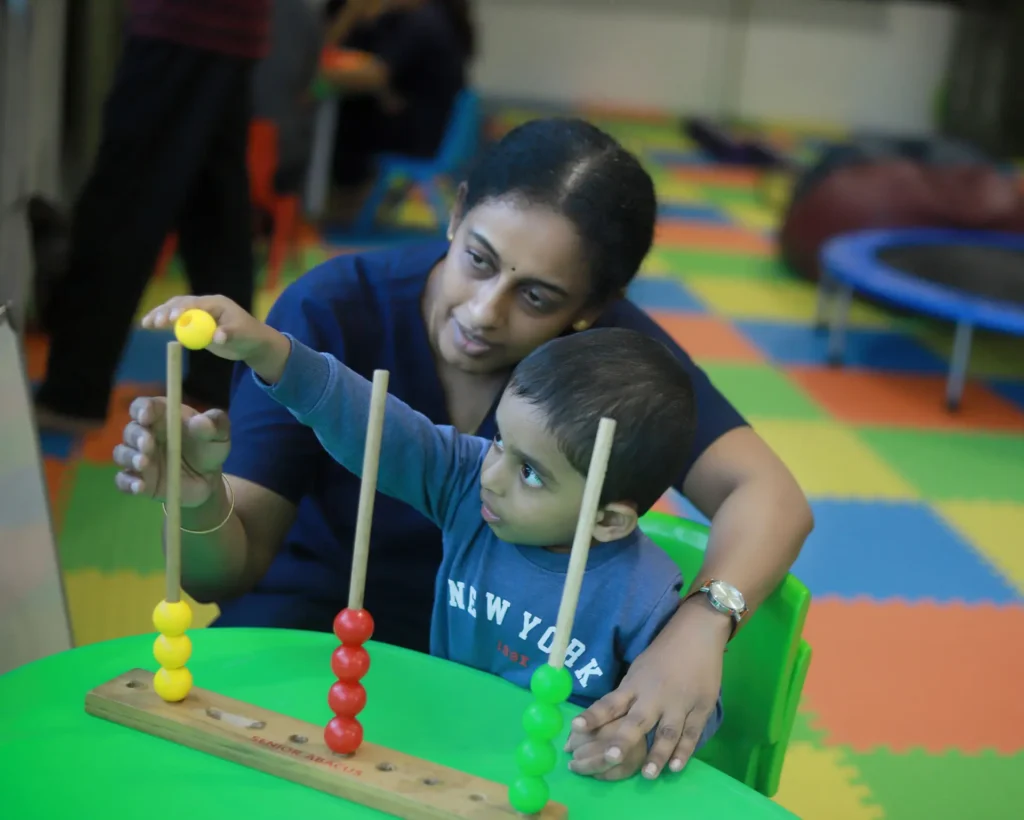
Some children struggle with things we often take for granted: holding a spoon, sitting still, tying shoelaces, writing their name. We help them build those everyday skills, gently and patiently, in ways that feel more like play than therapy.
🔍 What is occupational therapy?
Occupational therapy isn’t just about skills, it’s about confidence, comfort, and freedom.
At Living Life, we use occupational therapy to help children master the everyday tasks that most people don’t think twice about, but for some kids, they’re a mountain. Things like getting dressed, brushing their teeth, sitting upright in class, managing noise, or even just holding a spoon.
If your child avoids certain textures, tires easily while writing, or melts down in noisy places, that’s not “being difficult.” It might be their nervous system asking for support.
Our job is to listen to those signs, and respond with care, structure, and child-led strategies.
No rush. No pressure. Just steady, science-backed support that helps them participate fully in life.
Because when a child feels in control of their body and their space, the world stops feeling so overwhelming, and starts feeling possible.
📈 How LivingLife helps?
We support your child in areas like:
Fine motor skills (grasping, writing, self-feeding)
Gross motor coordination (balance, jumping, posture)
Sensory processing and regulation
Hand-eye coordination
Emotional self-regulation
Attention and focus
Building independence in daily tasks
👩⚕️ Our Approach: Rooted in Trust, Built on Play
No two children are the same, so we don’t expect them to grow the same way.
At Living Life, we take a child-first, heart-led approach to occupational therapy. That means we begin by building trust, not ticking checklists. We observe gently, listen deeply, and shape each session around your child’s pace, personality, and sensory needs.
Instead of rushing goals, we create small moments of safety, where your child feels seen, not evaluated. We use play as therapy, not just as a warm-up, because play is how children naturally explore, learn, and regulate.
And we don’t stop at the clinic door. We coach parents with practical, compassionate strategies that you can use at home, in the car, at the grocery store, in real life.
Because growth doesn’t just happen in sessions. It happens between them.
Tiny Wins, Big Meaning
Progress in our world doesn’t always look dramatic, but it’s life-changing.
It’s in the child who finally zipped up their jacket after weeks of trying.
The one who used both hands to climb the slide, when stairs used to scare them.
The one who made it through a birthday party without needing to leave early.
Or the quietest win of all: when they smiled at themselves for the very first time.
These may not show up on a milestone chart, but here? They’re celebrated like the victories they are.
Ready to Begin?
If you’re wondering whether your child needs help, trust that wondering is enough.
We’re here to listen, to guide, and to walk with you.